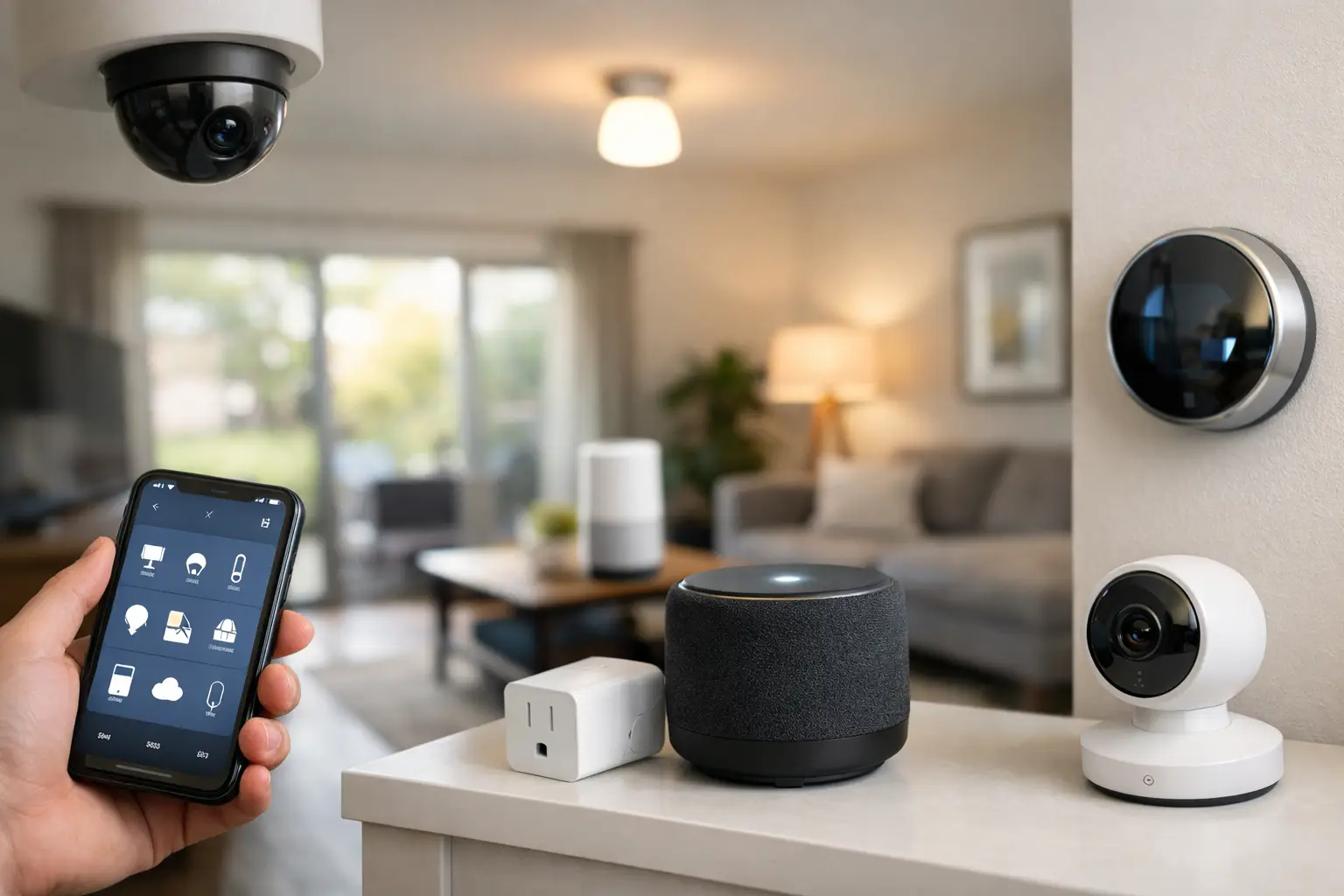
Most people do not need more smart devices. They need better systems. The best smart home automation ideas are the ones that remove small daily tasks, improve security, and keep control simple instead of turning the house into a troubleshooting project.
For homeowners and property managers, that usually means focusing on a few categories first - entry, lighting, climate, surveillance, and alerts. When those systems work together, the result is not just convenience. It is better oversight, faster response, and less day-to-day friction.
What makes smart home automation worth doing
A good automation setup should solve a real problem. That could be making sure the doors lock at night, turning on exterior lights when motion is detected, adjusting temperature based on occupancy, or getting a clear alert when someone approaches the property.
The mistake is buying devices one at a time without a plan. That often creates app overload, weak integrations, and inconsistent performance. A better approach is to think in terms of routines and zones. What should happen at the front door? What should happen when everyone leaves? What should happen after business hours or overnight?
That planning matters even more in larger homes, vacation properties, and multi-use buildings where security and convenience need to work together.
Best smart home automation ideas for daily control
1. Create a real arrival and departure routine
One of the most useful automations is also one of the simplest. When someone leaves, the system can lock doors, arm security, turn off selected lights, adjust the thermostat, and close the garage if it was left open. When someone arrives, those actions can reverse based on time, occupancy, or user credentials.
This works well because it bundles several manual steps into one event. The trade-off is that reliability depends on good device coordination. If geofencing is the only trigger, false departures can happen. For that reason, many properties work better with layered triggers such as phone location plus door activity or a keypad disarm event.
2. Automate smart locks with video doorbell activity
A smart lock on its own is useful. Paired with a doorbell camera and a managed access routine, it becomes much more practical. You can create temporary access for guests, service vendors, dog walkers, or cleaners and know when those codes were used.
For rental or secondary properties, this idea saves time and improves accountability. The key is setting access rules that match the property. A family home may need simple user codes and instant mobile alerts. A managed property may need schedules, audit trails, and code expiration built into the setup.
3. Use lighting scenes instead of individual smart bulbs everywhere
Lighting automation is one of the best smart home automation ideas because the payoff is immediate. The wrong way to do it is filling the house with disconnected bulbs. The better move is designing scenes for how the property is actually used.
A morning scene can bring up kitchen and hallway lighting gradually. An away scene can shut off interior lighting while keeping selected exterior lights on a schedule. A nighttime scene can dim common areas and keep pathways visible without over-lighting the home.
In Florida properties, exterior lighting also has a security role. Entry points, side yards, pool areas, and driveways should be treated as part of the security plan, not just the lighting plan.
4. Trigger exterior lights from motion and camera events
Exterior automation is where convenience and deterrence meet. When motion is detected near a driveway, gate, front entry, or side access path, lights can activate immediately. In some setups, cameras can also flag that event for review.
This idea works especially well around dark perimeters and access points that are not visible from inside. The caution is sensitivity. If lighting triggers every time a car passes or a branch moves, people stop paying attention. Placement, zone tuning, and realistic thresholds matter.
Security-focused automation ideas that do more than send alerts
5. Build a layered alarm response
Many systems can notify you when a door opens or a sensor trips. That is only the starting point. A stronger setup layers multiple responses based on the event type.
If a perimeter door opens during normal hours, maybe the result is just a notification. If that same door opens overnight while the system is armed, the automation can trigger interior lights, activate recording priorities, send immediate alerts, and escalate to monitoring or designated contacts.
That kind of logic reduces noise and makes alerts more meaningful. It also helps commercial users and larger households avoid the common problem of too many notifications with too little context.
6. Add smart garage oversight
The garage is often treated as separate from the rest of the security system, even though it is one of the most common access points. A connected garage door controller can confirm whether the door is open, close it remotely, and include it in departure routines.
This matters for both security and energy efficiency. In attached garages, an open door can affect indoor temperatures and create an easy entry path. For homes with storage, tools, or secondary refrigerators, it also protects a space that is often overlooked.
7. Use leak detection with automatic shutoff
Not every high-value automation is about intrusion. Water damage is one of the most expensive and disruptive property issues, especially in seasonal homes or buildings that may sit unoccupied for periods of time.
Leak sensors near water heaters, laundry areas, sinks, and mechanical rooms can trigger alerts early. In more advanced setups, a shutoff valve can stop water flow automatically when a major leak is detected. That is a practical automation with a clear financial upside.
Best smart home automation ideas for comfort and efficiency
8. Make climate control occupancy-based
Smart thermostats are common, but many are underused. The real benefit comes from tying temperature schedules to occupancy, room usage, and time of day.
For example, a house can reduce cooling when everyone leaves, pre-condition before arrival, and maintain different settings for sleeping hours. In mixed-use properties or larger homes, this gets even better when zoning is part of the design.
The trade-off is complexity. If the house has uneven airflow, old equipment, or multiple additions, thermostat automation alone will not fix comfort issues. It works best when the HVAC layout and controls are addressed together.
9. Add automated shades where heat gain matters most
In Florida, solar heat gain can push cooling costs up fast. Automated shades in west-facing rooms, large glass openings, or common areas can help control glare and reduce heat load during the hottest parts of the day.
This is one of those ideas that sounds optional until it is tied to a schedule or sun position and runs consistently. It improves comfort, protects interiors, and supports HVAC efficiency without relying on someone to adjust shades manually.
Smart home automation ideas that improve property management
10. Set up property status alerts
For second homes, rentals, and managed properties, the best automation may be status visibility. That means knowing if a door is unlocked, whether the alarm is armed, if the temperature has moved outside a set range, or if a camera goes offline.
These are not flashy automations, but they prevent small issues from becoming service calls or security gaps. They also help owners and managers maintain oversight without being physically present.
11. Centralize control instead of adding more apps
This is less of a device idea and more of a system decision, but it is one of the most important. If lighting lives in one app, cameras in another, locks in another, and thermostats somewhere else, adoption usually falls off. People use only the easiest functions and ignore the rest.
Centralized control changes that. A unified interface, consistent programming, and professional configuration make automations easier to use and easier to maintain. For larger homes and managed properties, that structure often matters more than which individual device brand was chosen.
How to choose the best smart home automation ideas for your property
Start with the moments that create the most friction. If you constantly check whether doors are locked, begin with entry control. If exterior visibility is poor at night, start with cameras and lighting. If the issue is managing a second property remotely, prioritize alerts, access, and environmental monitoring.
It also helps to think about who will use the system every day. A tech-savvy homeowner may be comfortable with more customization. A family, facility team, or rental operation usually needs cleaner workflows, clearer permissions, and fewer points of failure.
Professional design also matters when systems cross over into security, surveillance, access control, garage integration, and whole-property automation. This is where a full-service provider can simplify planning and prevent compatibility issues before installation starts. For clients in Miami, Orlando, and Tampa, 1 Stop Security often sees the same pattern: the best results come from organized system design, not from stacking random smart devices over time.
A smart property should reduce decisions, not create new ones. The right automation ideas do exactly that - they keep the building more secure, more efficient, and easier to manage without asking you to babysit the technology.