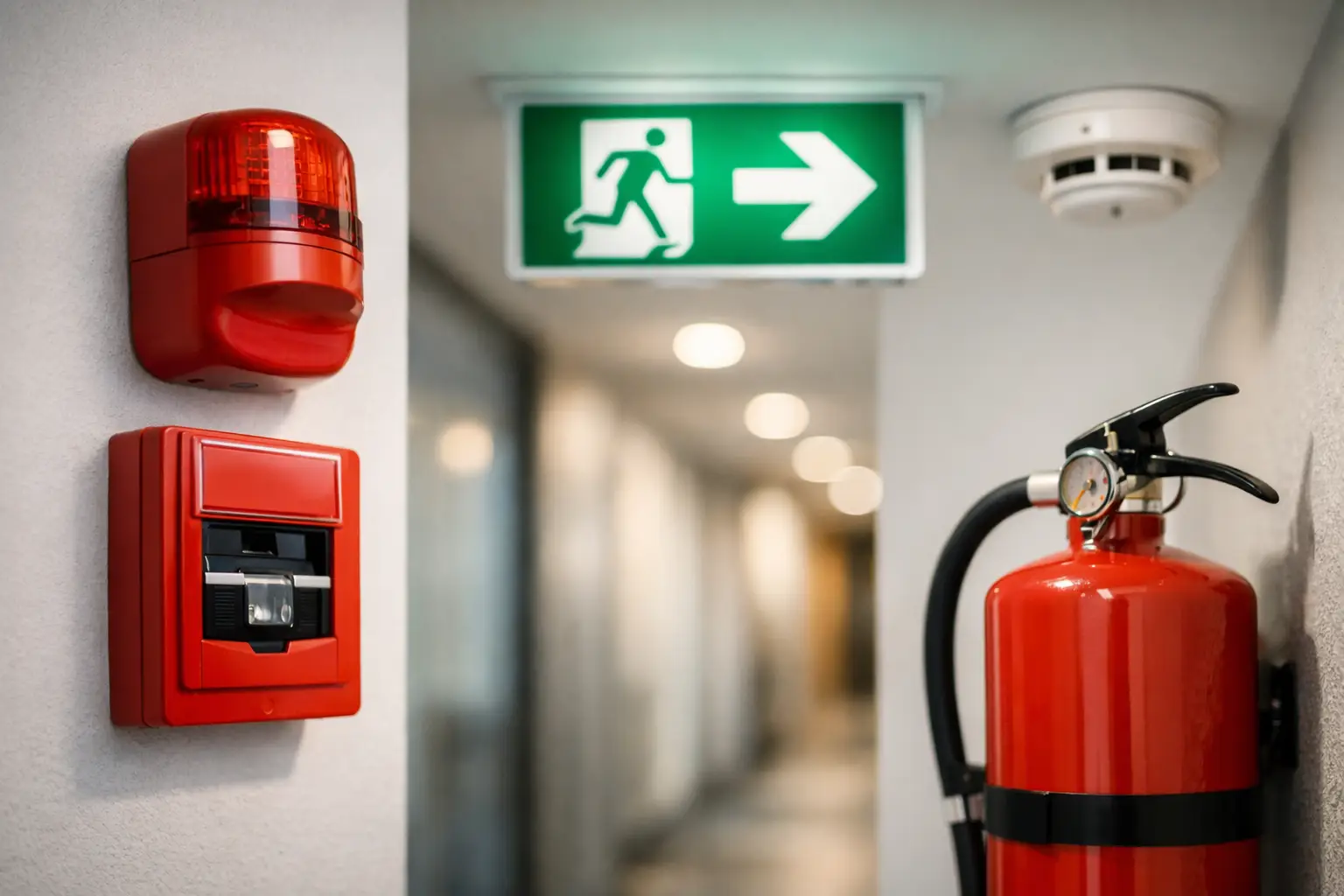
A property emergency rarely gives anyone time to find instructions, charge a dead device, or decide who has authority to act. Emergency system requirements should be planned around what must continue working when normal operations fail: detection, notification, communication, access, lighting, and the power supporting each function.
For a homeowner, that may mean knowing an alarm can report an intrusion during an outage and that exterior cameras still capture usable footage. For a facility operator, it may mean coordinating fire alarm interfaces, emergency communications, controlled egress, generator-backed systems, and documented testing. The right scope depends on the building, occupancy, local code, and the risks the property faces.
Start With the Actual Emergency Scenario
The first question is not which device to buy. It is what event the system needs to manage. A small retail shop, a multifamily property, a medical office, and a single-family home may all need security and communications, but their emergency priorities are different.
Consider the events most likely to interrupt normal operations: fire, forced entry, medical incidents, severe weather, flooding, power loss, equipment failure, or an after-hours access problem. Florida properties should give particular attention to prolonged utility outages, heavy rain, flooding exposure, and storm-related communication disruptions.
Each scenario should have a clear operational outcome. During a power outage, for example, the priority might be maintaining intrusion alarm reporting, critical camera coverage, and remote access to the system. During an evacuation event, priorities shift toward code-compliant notification, safe exit paths, and door behavior that supports egress.
This exercise prevents a common planning mistake: installing individual products without establishing how they will work together under pressure.
Core Emergency System Requirements
An effective emergency system is not necessarily the largest system. It is one that has defined responsibilities, dependable power, and a practical response path. The following requirements apply to most residential and commercial projects, although code-required life-safety systems must always be designed and approved for the specific site.
Detection and timely notification
A system must identify the event quickly enough for someone to act. Depending on the property, this can include intrusion detection, video analytics, panic devices, water sensors, smoke or heat detection, carbon monoxide detection, and equipment monitoring.
Detection only has value when it produces the right notification. Alerts should reach the people responsible for responding, using more than one path when the risk justifies it. A mobile notification may be useful for a homeowner, while a commercial site may need on-site annunciation, monitored alarm signaling, designated contact groups, or emergency messaging procedures.
Avoid alert overload. If every minor event produces the same urgent notification, staff and residents eventually ignore them. Set priorities so that critical alarms are unmistakable and routine system notices can be handled without creating confusion.
Backup power and protected connections
Power is one of the most overlooked emergency system requirements. Security panels, cameras, network switches, access control hardware, Wi-Fi equipment, cellular communicators, and recording devices all have separate power needs. If one critical component loses power, the whole chain may fail.
Battery backup should be sized for the equipment it supports and the expected outage duration. A basic uninterruptible power supply may keep a small network rack online briefly, while a larger facility may need generator support and properly planned circuits for essential systems. Battery condition also needs routine verification. A backup battery that has aged beyond its service life is not a backup plan.
Network and communication paths deserve the same attention. If internet service goes down, can the alarm still transmit through a cellular connection? If a network switch fails, which cameras or door controllers go offline? Separating critical devices from nonessential loads can improve recovery and make troubleshooting faster.
Safe access and egress behavior
Access control has to balance security with life safety. During an emergency, occupants must be able to exit as required by applicable codes. Controlled doors, locks, request-to-exit devices, fire alarm interfaces, and emergency release hardware all need to be selected and installed as a coordinated system.
This is not an area for assumptions. A door that remains secured when it should release can create a serious safety issue. A door that releases without a plan may expose a sensitive area during a localized security event. The required behavior depends on the opening, the occupancy, the fire protection design, and the authority having jurisdiction.
For commercial properties, document what each controlled opening does during power loss, fire alarm activation, lockdown, and manual override. Property staff should be able to answer that question without searching through old emails or calling multiple vendors.
Clear communications and assigned responsibility
The most capable equipment cannot replace a response plan. Someone must know who receives alerts, who contacts emergency services when appropriate, who has credentials to access the system, and who can authorize changes after an event.
For homes, keep emergency contacts, alarm monitoring information, and system login recovery details current. For businesses and managed properties, establish an escalation list with primary and backup contacts. Include after-hours contacts, tenant or department responsibilities, and the location of critical equipment such as panels, network racks, and manual releases.
A short written procedure is more useful than a long policy nobody reads. It should state what happens first, who is called, and how the property is secured or reopened afterward.
Code Coordination Is Part of the Design
Emergency systems operate within local building, fire, electrical, and life-safety requirements. These requirements vary by property type and jurisdiction. A solution that is appropriate for a residence may not meet the requirements for a restaurant, school, warehouse, or multifamily common area.
Coordinate early with the local authority having jurisdiction, building officials, fire officials, designers, and other trades when the project involves life-safety interfaces or permitted work. This is especially important when access control connects to fire alarm systems, when new low-voltage pathways are being added, or when a renovation changes the way occupants use a space.
Security, surveillance, and automation systems can support an emergency plan, but they do not replace code-required fire alarm, sprinkler, emergency lighting, or egress systems. Keeping those roles clear helps prevent gaps in responsibility and costly rework later.
Design for Operations, Not Just Installation
Many emergency systems work properly on turnover day and become less reliable over time because nobody owns testing, updates, or documentation. Operational readiness should be specified before installation begins.
Keep an organized record of device locations, equipment models, network details, account contacts, warranties, and service history. Commercial sites should also maintain current door schedules, camera views, access levels, and backup power records. When a manager changes or a property is sold, this documentation prevents control of the system from being lost.
Testing should follow the equipment manufacturer instructions, applicable codes, and the property’s risk level. Test alarm communications, battery backup, camera recording, remote access, door release behavior, and notification workflows. After testing, correct issues and record what was done. A test that exposes a failure is useful only if the failure is resolved.
For larger facilities, schedule drills or tabletop reviews with the people who will actually respond. A five-minute walkthrough can reveal problems that equipment tests miss, such as an outdated call list, a locked equipment room, or staff who do not know how to place a door system into the required emergency mode.
Build a Scope That Fits the Property
Budget matters, but cutting the wrong element can leave a system that looks complete while failing during an outage or emergency. Prioritize the functions that protect life, support required egress, maintain critical communications, and preserve the evidence or control needed after an incident.
A practical project scope should address at least these points:
- Events the system is expected to detect or manage
- Devices and areas considered critical during an outage
- Primary and backup communication methods
- Power backup duration and generator coordination, if applicable
- Door, lock, and egress behavior under defined conditions
- Monitoring, alert recipients, response responsibilities, and testing intervals
Integrated planning is usually more efficient than adding separate systems one at a time. When security, cameras, networking, access control, and automation are coordinated from the start, the property owner has fewer handoffs to manage and a clearer path for service. 1 Stop Security can help organize these low-voltage components into a plan that supports daily operations as well as emergency response.
The best time to resolve an emergency-system question is before an alarm sounds or the power goes out. Walk the property, identify the decisions that must happen fast, and make sure the equipment, power, contacts, and procedures support those decisions.